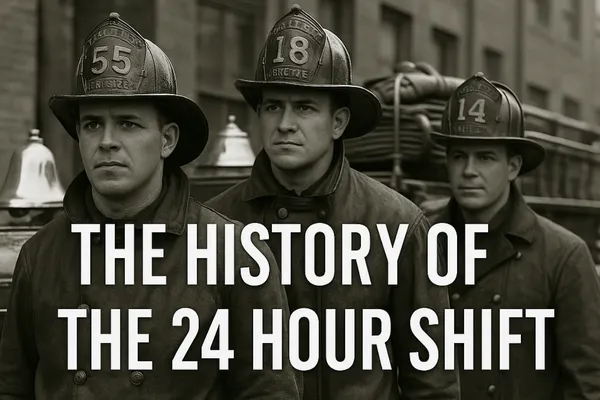
How We Got Here – A Brief History of the 24 Hour Shift in the Fire Service

The History of the 24 Hour Shift in the Fire Service
For many firefighters, the 24 hour shift feels as old as the job itself. But like most traditions in the fire service, it was not always this way, and it did not emerge overnight.
Early Firefighting Schedules
In the early 1900s, firefighters in large cities were required to live at the firehouse. They worked what was essentially a six or seven day week, only being relieved for short periods of time. Some were on duty for 84 to 112 hours a week, sleeping on cots between calls and seeing their families only occasionally.
The Shift Toward Reform
In the 1930s and 1940s, pressure from labor movements and growing awareness of occupational health helped introduce the idea of scheduled time off. Many departments moved to a two platoon system, typically a 10 hour day shift followed by a 14 hour night shift. While this was a step forward, it still required frequent shift rotations, making rest inconsistent and family life difficult.
The Emergence of the 24 Hour Shift
The modern 24 hour shift evolved out of both practicality and necessity. By combining the 10 and 14 hour shifts into one 24 hour period followed by 48 hours off, departments reduced the number of daily shift changes. This improved continuity of staffing, gave firefighters longer periods of rest, and aligned with how firehouses already operated.
Adoption and the 24/48 Standard
Throughout the 1970s and 1980s, the 24/48 schedule became the national standard. It offered a better balance than the grueling schedules that came before it. However, that balance still involved working over 2,900 hours a year—far more than the typical 40 hour work week most Americans follow.
The Case for the 24/72 Model
Departments exploring the 24/72 shift are not rejecting tradition. They are adapting it to meet the demands of today’s fire service. The profession has changed. The people have changed. The work has changed. The schedule should too.